Deliverable preview
What your report looks like
Real excerpts from the tool I use for the audit. Anonymized data (“Your brand”, “Competitor 1”…). Your own report is named and quantified.
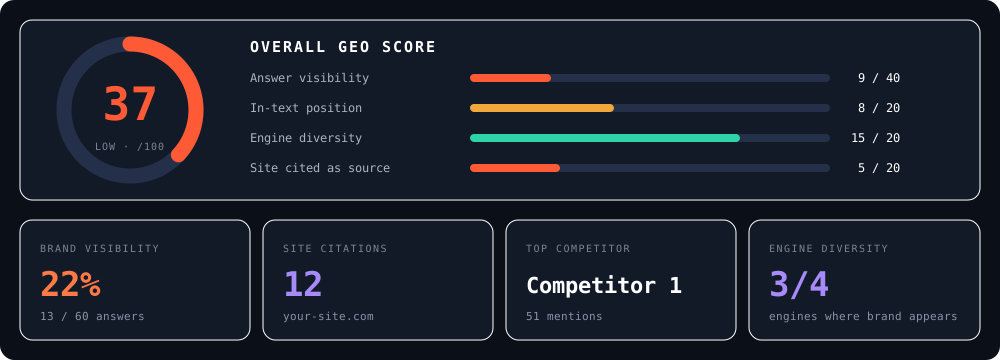
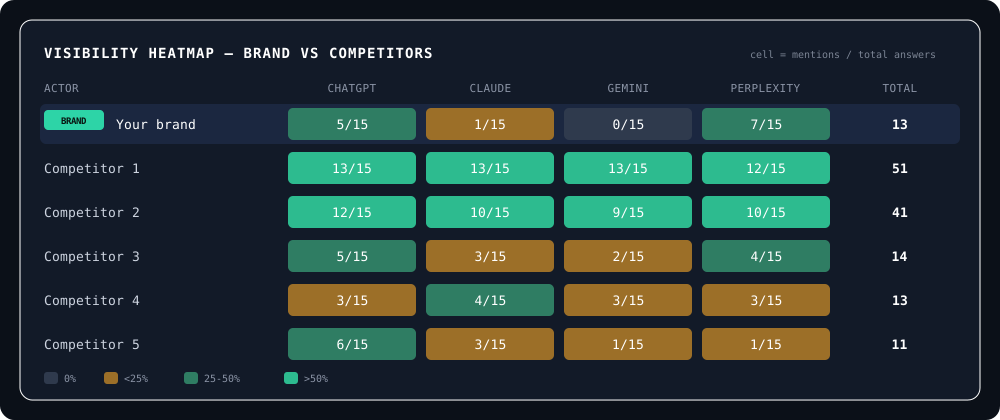
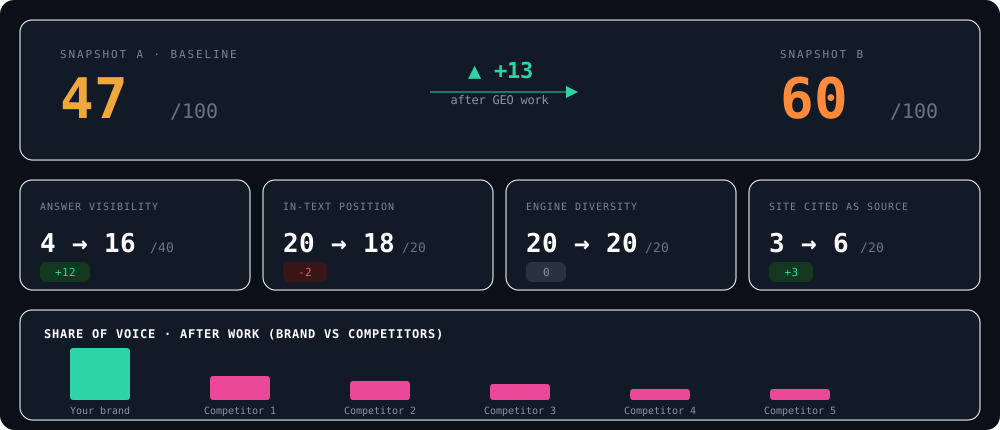
Do you know whether ChatGPT, Perplexity, Gemini and Google AI Overviews cite your brand when your prospects ask them a question? I measure it, prompt by prompt, and hand you a roadmap to move from invisible to cited.
When a prospect asks a generative AI, they don't get ten links: they get a written answer plus a handful of cited sources. If your brand is neither in the text nor in the sources, you are invisible, even if you rank #1 in classic SEO.
The GEO audit answers a simple, concrete question: when your customers ask an AI for advice in your field, do you show up? And if not, who shows up instead, and why.
Test question
"Which solution for [your industry]?" → are you cited?
Perplexity
Sources cited in real time → is your site one of them?
Verdict
Quantified AI Share of Voice + action plan
A structured report, readable by a decision-maker and a marketing team alike, that turns a fuzzy topic into data and actions.
The percentage of answers that cite your brand, engine by engine, benchmarked against direct competitors.
For each question tested: the AI answer, the cited sources, your position and the competitors mentioned.
Who shows up instead of you, why those players, and which strategic questions no one owns yet.
How the AIs perceive your authority: signals present, signals missing, what blocks the citation.
The heart of the deliverable: an action plan ranked by effort/impact to go from invisible to cited on the questions that matter.
A session to review the findings together, prioritize against your business goals and answer your questions.
Real excerpts from the tool I use for the audit. Anonymized data (“Your brand”, “Competitor 1”…). Your own report is named and quantified.
The same method I apply on engagements, built to resist the #1 GEO trap: testing once and concluding.
~30 real prospect questions in natural language, grouped by buying intent.
ChatGPT (with/without web), Perplexity, Gemini and Google AI Overviews.
Each prompt replayed over several days to smooth LLM volatility.
Share of Voice, citations, sentiment, competitors and orphan prompts.
Action plan ranked by effort/impact + walkthrough call.
AI answers are extremely volatile: a brand cited on Thursday can vanish on Monday with no change on your side. Testing once produces an anecdote. Replaying the prompts over several days produces data you can steer by. That's what separates this audit from a screenshot.
Indicative prices excl. VAT, adjusted to the real scope (number of prompts, markets, languages). Custom quote after a first chat.
The quick snapshot to see where you stand.
The full diagnostic with an actionable roadmap.
To steer over time, not just observe.
A GEO audit is not worth the quality of its diagnosis, but the number of workstreams it opens. Three defects show up in almost every engagement, and none of them has anything to do with Google rankings: a blurry entity (the model does not know who you are), content that is not extractable (the answer arrives in the fourth paragraph, with no figure and no source), and an absence of third-party mentions (your entire presence is self-produced).
Technical fixes show up within weeks. The rest is measured in months: the first clear signal is often the accuracy of what is said about you, before share of voice even rises, which usually pulls away from the noise around the fifth month. That is why re-measurement follows a protocol (same prompts, same conditions, several waves) and never a screenshot.
I regularly run this kind of audit, for instance for a services brand or a high-end real-estate player. The trigger is almost always the same: the hunch that prospects now ask an AI before contacting anyone, with zero visibility on what comes out.
It pays off in clear cases: a brand well established in SEO that wants to check the equity transfers to the AIs; a sector where decisions follow a long research phase (B2B, services, real estate, training); or a brand discovering a competitor has become ChatGPT's default answer on its own topics.
A question about scope, turnaround or price? A message is often the simplest.